

Most businesses assume landing pages fail because of poor traffic, weak advertising, or limited visibility. While those factors matter, the real reason many landing pages underperform is far more psychological. Visitors rarely make decisions based on logic alone. Their actions are influenced by emotion, trust, visual perception, cognitive bias, and the overall user experience within the first few seconds of arriving on a page.
This is why landing page optimization is not simply about design aesthetics or technical performance. It is about understanding how people think, what captures attention, and what motivates users to take action. High-converting landing pages combine persuasive messaging, visual hierarchy, trust signals, and strategic call-to-action placement to guide users toward a desired outcome naturally.
In modern digital marketing, even small improvements in conversion rate optimization can produce significant business results. A landing page that converts slightly better can lower advertising costs, improve lead generation, and increase revenue without increasing traffic. As competition online continues growing, businesses that understand user psychology gain a major advantage in improving website conversions.
The most effective landing pages are not necessarily the most visually complex. They are the pages designed intentionally around human behavior. Every headline, image, color choice, layout section, and button placement influences how visitors feel and whether they trust the offer enough to respond.
Understanding the psychology behind landing page optimization allows businesses to move beyond guesswork and create digital experiences that convert visitors into customers more consistently.
Why Psychology Matters in Landing Page Optimization
Human attention online is extremely limited. Studies consistently show that users form impressions about websites within seconds. During that short window, visitors decide whether a page feels trustworthy, relevant, and worth exploring further.
Landing page optimization works best when businesses understand these psychological decision-making patterns. Visitors rarely analyze every detail rationally. Instead, they rely on mental shortcuts influenced by design clarity, emotional triggers, and perceived credibility.
A confusing layout, overwhelming content, or weak visual structure creates cognitive friction. Users may leave before fully understanding the offer. On the other hand, a clear and psychologically structured landing page reduces uncertainty and makes decisions feel easier.
This connection between user psychology and conversion behavior is what separates average landing pages from highly effective ones.
The Importance of First Impressions
First impressions heavily influence user behavior online. Visitors immediately evaluate whether a page appears professional, trustworthy, and aligned with their needs.
A cluttered design or inconsistent branding can reduce consumer confidence instantly. In contrast, clean layouts, focused messaging, and visually balanced pages create a sense of clarity and professionalism.
Psychologically, users associate simplicity and organization with reliability. Businesses that create visually calm and structured landing pages often improve website conversions because users feel more comfortable engaging further.
Emotional Decision-Making in Conversions
Although consumers often justify decisions logically afterward, most purchasing decisions are emotionally influenced first. Landing pages that connect emotionally tend to perform better than pages focused entirely on technical information.
Emotional triggers may include:
- trust,
- urgency,
- exclusivity,
- relief from frustration,
- or aspiration for improvement.
Effective landing page optimization aligns messaging with the emotional motivations of the target audience. Users must feel that the offer solves a meaningful problem or improves their situation in some way.
Visual Hierarchy and User Attention
Visual hierarchy is one of the most important principles in landing page design. It determines where users look first, what information they notice most, and how smoothly they navigate the page.
Guiding User Focus Naturally
Users do not read landing pages line by line. Instead, they scan visually for relevant information and cues that indicate value. Businesses must structure pages strategically to guide attention toward the most important elements.
Headlines typically receive the most immediate attention, followed by supporting visuals, key benefits, and call-to-action buttons. Strong visual hierarchy ensures that these elements stand out clearly without overwhelming the visitor.
Whitespace also plays a major role. Pages crowded with excessive text or competing design elements increase cognitive overload and reduce clarity. Simpler layouts often perform better because they help users focus on the core message.
The Role of Color and Contrast
Color psychology influences perception and attention significantly. High-contrast buttons and strategically highlighted sections help guide users toward important actions.
However, effective use of color is not simply about making buttons bright. The goal is to create visual balance while ensuring key actions remain immediately noticeable.
Consistent color schemes also strengthen trust and brand credibility. Random or overly aggressive color combinations can create confusion and reduce professionalism.
Persuasive Messaging and Conversion Rate Optimization
Strong design alone cannot drive conversions if messaging lacks clarity or relevance. Persuasive communication is essential for effective conversion rate optimization.
Clear Value Propositions
One of the biggest mistakes businesses make is failing to communicate value quickly. Visitors should immediately understand:
- what the offer is,
- who it is for,
- and why it matters.
A strong headline addresses a specific problem or desired outcome clearly. Supporting text should reinforce benefits rather than focusing only on features.
For example, users respond more strongly to messages explaining how a product saves time, reduces stress, or improves results rather than technical specifications alone.
Reducing User Uncertainty
People hesitate to convert when uncertainty exists. Questions about pricing, credibility, results, or security can interrupt decision-making.
Landing page optimization should address these concerns proactively through:
- testimonials,
- guarantees,
- case studies,
- certifications,
- or transparent explanations.
Trust signals reduce perceived risk and increase consumer confidence during the conversion process.
The Psychology Behind Call-to-Action Strategy
The call-to-action is often the most important element on a landing page because it represents the final decision point.
Strategic CTA Placement
Many businesses treat call-to-action buttons as simple design elements, but placement significantly influences user behavior. CTAs should appear naturally within the flow of information rather than feeling forced or repetitive.
Users typically need enough context before committing to action. A CTA placed too early may feel premature, while a CTA hidden too deep within the page may lose visibility.
High-converting landing pages often place CTAs strategically after moments of value explanation, emotional reinforcement, or trust-building content.
Action-Oriented Language
CTA wording also affects conversion performance. Generic phrases like “Submit” or “Click Here” often feel impersonal and uninspiring.
More persuasive CTAs emphasize outcomes or benefits, such as:
- “Start Improving Results,”
- “Get Your Free Strategy,”
- or “Book Your Consultation.”
Action-oriented language helps users visualize the benefit of taking the next step.
Trust Signals and Brand Credibility
Trust is one of the strongest psychological drivers behind website conversions. Users are far more likely to engage with businesses they perceive as credible and reliable.
Social Proof and Consumer Confidence
Social proof influences decision-making because people naturally look for reassurance from others before making commitments. Testimonials, reviews, ratings, and customer success stories help validate the offer psychologically.
When users see evidence that others achieved positive results, hesitation decreases. This principle becomes especially important for service businesses, SaaS companies, and high-value purchases where perceived risk is higher.
Consistency and Professional Design
Professional presentation strongly affects brand credibility. Inconsistent layouts, outdated visuals, or poor mobile optimization can damage trust immediately.
Landing page optimization should ensure:
- fast loading speeds,
- mobile responsiveness,
- consistent branding,
- and intuitive navigation.
Users subconsciously associate polished digital experiences with higher-quality businesses.
User Psychology and Mobile Experience
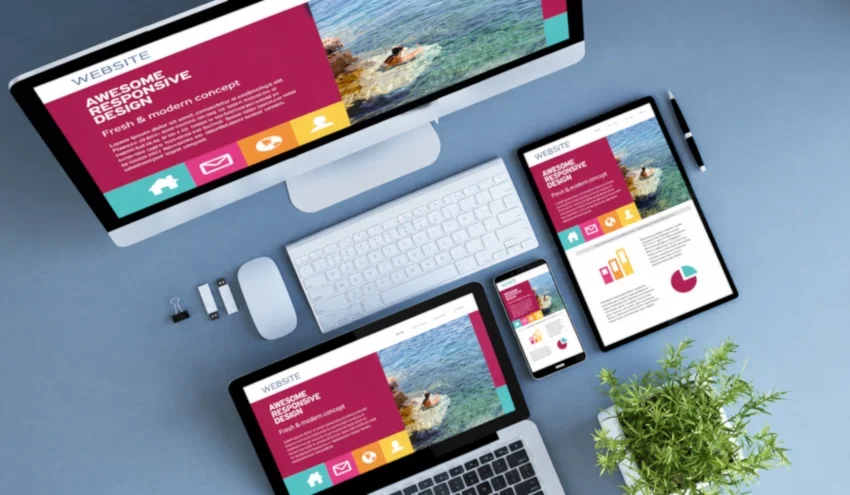
Mobile traffic now dominates many industries, making mobile-friendly design essential for conversion rate optimization.
Reducing Friction on Mobile Devices
Mobile users behave differently than desktop users. Smaller screens reduce attention span and increase sensitivity to friction.
Complicated forms, slow-loading pages, or excessive scrolling can reduce website conversions quickly. Effective mobile landing pages prioritize simplicity, readability, and fast interaction.
Buttons should remain easy to tap, content should be concise, and page structure should support effortless navigation.
Speed and User Patience
Page speed also has a strong psychological impact. Users associate slow websites with poor reliability and frustration.
Even minor loading delays can reduce trust and increase bounce rates significantly. Fast-loading landing pages improve both user satisfaction and search performance.
Data-Driven Landing Page Optimization
Successful landing pages are rarely built perfectly on the first attempt. Continuous testing and refinement are essential for improving conversions over time.
A/B Testing and Behavioral Insights
Businesses use A/B testing to compare variations of headlines, layouts, CTA buttons, or visual elements. These tests reveal how users respond psychologically to different experiences.
Small changes can produce major differences in performance. Adjusting button placement, simplifying copy, or improving visual hierarchy may significantly increase conversions.
Analytics and User Behavior Tracking
Heatmaps, session recordings, and behavioral analytics tools help businesses understand how visitors interact with landing pages.
These insights reveal:
- where users lose attention,
- which sections receive the most engagement,
- and where friction interrupts conversions.
Data-driven optimization removes assumptions and supports more effective decision-making.
Conclusion
Landing page optimization is fundamentally rooted in psychology. High-converting pages succeed because they align with how people think, feel, and make decisions online. Every design choice, message, visual element, and call-to-action influences user perception and conversion behavior.
Businesses that understand user psychology can improve website conversions by reducing friction, strengthening trust, and guiding attention strategically through visual hierarchy and persuasive communication. Effective conversion rate optimization is not about manipulating users. It is about creating clear, trustworthy, and emotionally relevant experiences that make decisions easier and more comfortable.
As digital competition continues increasing, businesses that master the psychology of landing pages will gain a significant advantage in lead generation, customer acquisition, and long-term growth. The most successful landing pages are not built around trends alone. They are built around human behavior, trust, and the ability to communicate value clearly in moments where attention is limited and decisions happen quickly.
