

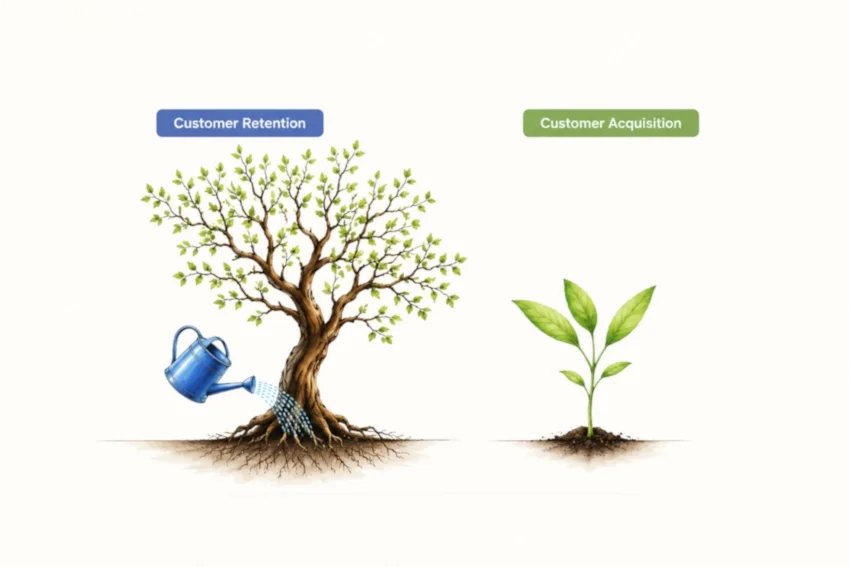
Many businesses focus heavily on acquiring new customers, believing growth depends primarily on expanding reach and attracting fresh audiences. Marketing budgets often prioritize advertising campaigns, lead generation, and customer acquisition funnels designed to increase visibility and traffic. While attracting new customers remains important, many companies underestimate a more profitable and sustainable growth strategy: retaining existing customers.
The reality is simple. Acquiring new customers is significantly more expensive than keeping current ones engaged. Businesses invest heavily in advertising, sales outreach, and promotions to gain attention in increasingly competitive markets. Yet once customers make a purchase, many companies shift their focus elsewhere instead of strengthening the relationship they have already built.
This approach creates missed opportunities for long-term profitability. Repeat customers tend to spend more, purchase more frequently, and require lower marketing costs over time. Strong customer retention strategies not only improve revenue stability but also strengthen brand loyalty, customer advocacy, and long-term business growth.
In today’s competitive digital economy, businesses that prioritize retention marketing often outperform competitors focused only on acquisition. Customer loyalty programs, personalized experiences, and relationship-driven engagement help companies build deeper trust while increasing long-term customer value.
The businesses achieving sustainable growth are not simply attracting attention. They are building relationships strong enough to keep customers returning consistently over time.
Why Customer Retention Matters More Than Ever
Modern consumers have endless choices. Whether shopping online, subscribing to software, or choosing service providers, customers can compare alternatives within seconds. This makes long-term relationships increasingly valuable.
Customer retention strategies help businesses create stability in an environment where acquisition costs continue rising. Digital advertising has become more expensive, competition for attention is intense, and customer expectations are higher than ever before.
At the same time, existing customers already understand the brand, products, and customer experience. Businesses spend less time educating or convincing repeat buyers compared to first-time prospects.
The Cost Difference Between Acquisition and Retention
Acquiring new customers often requires substantial investment in:
- advertising,
- content marketing,
- lead generation,
- social media campaigns,
- and sales outreach.
Retention marketing, by comparison, usually costs less because businesses are communicating with customers who already trust the brand.
Repeat customers are also more likely to convert quickly because the initial trust barrier has already been overcome. This lowers customer acquisition costs while improving overall profitability.
Long-Term Revenue Stability
Businesses relying heavily on constant acquisition often experience unstable growth patterns. Revenue fluctuates depending on advertising performance, market conditions, or campaign effectiveness.
Strong customer retention creates more predictable revenue streams. Loyal customers purchase repeatedly, renew subscriptions, and continue engaging with the business over time.
This stability allows companies to plan more effectively and invest in long-term growth strategies with greater confidence.
The Psychology Behind Customer Loyalty
Customer loyalty is not built solely through discounts or promotions. Loyalty develops when customers consistently feel valued, understood, and confident in the business relationship.
Trust and Emotional Connection
Consumers often make decisions emotionally before justifying them logically. Businesses that create positive emotional experiences strengthen customer relationships far beyond transactional interactions.
Reliable service, transparent communication, and consistent quality build trust gradually over time. Customers who trust a company are less likely to switch to competitors based purely on price.
This emotional connection becomes one of the strongest drivers of long-term customer value.
Consistency Builds Loyalty
Consistency is essential for customer retention strategies. Customers return to businesses they can depend on repeatedly.
Inconsistent experiences, delayed support, or poor communication can quickly weaken customer confidence. On the other hand, companies that consistently deliver quality experiences create stronger loyalty and higher retention rates.
Every interaction contributes to how customers perceive the brand overall.
Customer Retention Strategies That Drive Growth
Successful retention marketing requires more than occasional follow-up emails or promotional offers. Businesses must create ongoing value throughout the customer journey.
Personalization Improves Engagement
Customers increasingly expect personalized experiences. Businesses that understand customer behavior and preferences can deliver more relevant communication and recommendations.
Personalized product suggestions, targeted email campaigns, and tailored customer support experiences help customers feel recognized rather than treated as anonymous transactions.
This relevance improves engagement and strengthens long-term relationships.
Exceptional Customer Service Creates Loyalty
Customer service remains one of the most important drivers of retention. Fast responses, helpful support, and proactive communication influence whether customers continue engaging with a business.
Even when problems occur, businesses that resolve issues professionally often strengthen loyalty rather than damage it. Customers remember how companies handle challenges, not just how they perform during ideal situations.
Strong support experiences increase consumer confidence and encourage repeat customers over time.
Consistent Communication Matters
Retention marketing depends heavily on maintaining communication after the first purchase. Many businesses lose customers simply because engagement ends too quickly.
Email newsletters, educational content, product updates, and loyalty campaigns help businesses remain connected with customers consistently. Effective communication should provide value rather than focusing entirely on sales promotions.
Businesses that continue educating, supporting, and engaging customers often achieve stronger retention results.
The Role of Customer Loyalty Programs
Customer loyalty programs are one of the most effective ways to encourage repeat purchases and long-term engagement.
Rewarding Repeat Customers
Loyalty programs give customers incentives to continue purchasing from the same brand. Discounts, reward points, exclusive offers, or member-only benefits create additional motivation for continued engagement.
More importantly, loyalty programs reinforce the feeling that customers are appreciated. Recognition strengthens emotional loyalty alongside financial incentives.
Businesses that reward loyalty consistently often improve customer lifetime value significantly.
Creating Community and Exclusivity
Some of the most successful customer loyalty programs go beyond discounts and focus on building community. Exclusive experiences, early access opportunities, and VIP benefits help customers feel connected to the brand identity itself.
This psychological sense of belonging can become a powerful retention factor, especially for lifestyle brands, SaaS companies, and subscription-based businesses.
Retention Marketing and Long-Term Customer Value
One of the biggest advantages of customer retention strategies is the increase in long-term customer value.
Higher Spending Over Time
Repeat customers often spend more than first-time buyers because trust reduces hesitation. As customers become more familiar with a brand, they are more willing to explore additional products or services.
This increased spending improves profitability without requiring businesses to constantly acquire new leads.
Long-term customers also tend to convert more quickly because they already understand the business and its value proposition.
Referral and Advocacy Benefits
Satisfied customers frequently become brand advocates. Recommendations from loyal customers often generate high-quality referrals because trust already exists between the recommender and the new prospect.
Word-of-mouth marketing remains one of the most powerful forms of customer acquisition because consumers trust peer recommendations more than advertisements.
Businesses with strong retention rates often experience organic growth through customer advocacy alone.
Using Data to Improve Customer Retention
Modern businesses increasingly use analytics and customer behavior insights to strengthen retention marketing efforts.
Understanding Customer Behavior
Data helps businesses identify:
- purchasing patterns,
- engagement trends,
- churn risks,
- and customer preferences.
These insights allow companies to personalize communication and intervene before customers disengage completely.
For example, businesses may detect declining engagement activity and send targeted offers or support messages before losing valuable customers.
Predictive Retention Strategies
Artificial intelligence and predictive analytics are making customer retention strategies more proactive. Businesses can now forecast customer churn risk and identify which users are most likely to leave.
This allows organizations to focus retention efforts strategically rather than applying the same approach to every customer.
Predictive retention marketing is becoming increasingly important in subscription-based industries and competitive digital markets.
Common Mistakes Businesses Make
Despite understanding the importance of retention, many businesses still prioritize acquisition too heavily.
Ignoring Existing Customers
One of the most common mistakes is investing heavily in attracting new customers while neglecting current ones. Customers notice when businesses provide stronger incentives for new buyers than loyal existing users.
Retention requires ongoing appreciation and relationship-building, not just initial conversion efforts.
Over-Automation Without Human Connection
Automation improves efficiency, but excessive automation can make customer experiences feel impersonal.
Businesses should balance technology with authentic communication and human support. Customers want convenience, but they also value empathy and genuine engagement.
Strong retention marketing combines personalization, automation, and human relationship-building effectively.
The Future of Customer Retention
As competition increases and acquisition costs continue rising, customer retention will likely become even more important for sustainable business growth.
Businesses are increasingly shifting from transaction-focused models toward relationship-focused strategies. Customer experience, personalization, and emotional loyalty are becoming central competitive advantages.
Artificial intelligence, predictive analytics, and advanced customer insights will continue improving how businesses understand and engage customers. However, trust, consistency, and customer care will remain the foundation of long-term retention success.
The companies that thrive in the future will not simply be the ones attracting the most attention. They will be the businesses customers choose to stay with repeatedly over time.
Conclusion
Customer retention strategies are no longer optional for businesses seeking sustainable growth. While customer acquisition remains important, long-term profitability often depends more on keeping existing customers engaged, loyal, and satisfied.
Repeat customers provide greater revenue stability, stronger brand advocacy, and higher long-term customer value while reducing marketing costs significantly. Businesses that invest in customer loyalty programs, personalized experiences, and retention marketing create stronger relationships that support consistent growth.
In competitive markets where consumers have endless choices, trust and loyalty have become major differentiators. Companies that prioritize customer relationships rather than short-term transactions are better positioned to improve retention, strengthen business reputation, and build sustainable success over time.
The future of business growth belongs not only to brands that attract customers effectively but also to those that keep customers returning consistently through meaningful experiences, reliable service, and long-term trust.
