

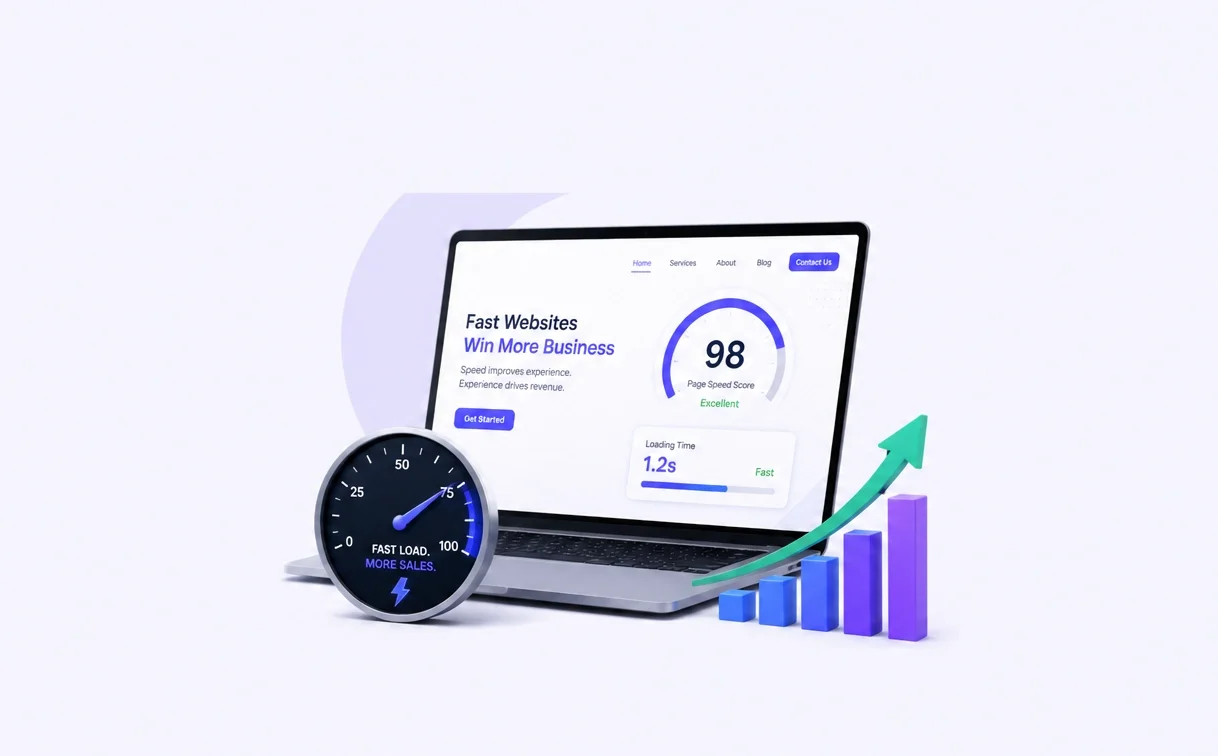
Consumers expect websites to load instantly, navigate smoothly, and respond without delays across all devices. When websites fail to meet those expectations, users often leave before engaging with content, exploring products, or completing purchases. What appears to be a minor technical issue can quickly become a major business problem affecting revenue, search visibility, and customer trust.
This is why website speed optimization has become one of the most important priorities in modern digital strategy. Website performance no longer affects only technical usability. It directly impacts user experience SEO, conversion rates, mobile engagement, and long-term business growth. Search engines increasingly reward fast-loading websites because speed improves overall user satisfaction and accessibility.
The financial impact of slow websites is often underestimated. Delays of even a few seconds can reduce conversions, increase bounce rates, and damage customer confidence. In highly competitive markets where users have endless alternatives, patience is extremely limited. Businesses that fail to optimize page load speed risk losing both traffic and revenue to faster competitors.
At the same time, website speed optimization creates advantages that extend beyond rankings and technical performance. Faster websites improve customer engagement, strengthen brand credibility, and support smoother digital experiences across every stage of the customer journey.
As mobile browsing, AI-powered search, and digital commerce continue expanding, website performance is becoming a core business growth factor rather than simply a technical concern.
Why Website Speed Matters More Than Ever
Modern internet users expect immediate access to information. Whether browsing an eCommerce store, reading a blog article, or exploring professional services, visitors form impressions within seconds of landing on a website.
A slow-loading website creates frustration before users even engage with the content itself. This negative first impression often leads to abandonment, reducing opportunities for engagement, lead generation, or sales conversion.
The Psychology of Speed and User Behavior
Website speed affects how users perceive businesses psychologically. Fast websites feel more professional, reliable, and trustworthy, while slow websites often create uncertainty and frustration.
Users subconsciously associate loading delays with inefficiency or poor quality. Even if products or services are excellent, slow performance can damage consumer confidence before the business has a chance to communicate its value.
This relationship between speed and perception makes website performance a critical part of user experience SEO.
Short Attention Spans Increase the Risk
Digital attention spans continue shrinking as users consume information across multiple devices and platforms simultaneously. People expect frictionless online experiences and quickly abandon websites that fail to load efficiently.
The rise of mobile browsing has intensified this challenge. Mobile users often browse while multitasking, traveling, or using slower internet connections. Delays that might feel minor on desktop devices become far more frustrating on mobile environments.
Businesses that prioritize page load speed are better positioned to keep users engaged in highly competitive digital markets.
Website Speed Optimization and SEO Performance
Search engines increasingly prioritize user experience as part of ranking algorithms. Website speed optimization directly supports this goal by improving usability, accessibility, and engagement.
Speed as a Search Ranking Factor
Search engines recognize that faster websites create better user experiences. As a result, page speed has become an important SEO ranking signal, especially for mobile search results.
Slow websites often struggle with:
- higher bounce rates,
- lower engagement,
- reduced session duration,
- and weaker overall user satisfaction metrics.
These behavioral signals influence how search engines evaluate website quality and relevance over time.
Businesses investing in website performance often experience stronger organic visibility because faster sites align better with modern search expectations.
Core Web Vitals and User Experience SEO
Google’s Core Web Vitals framework further emphasizes the importance of speed and usability. Metrics such as loading performance, visual stability, and interactivity directly influence user experience SEO.
Websites that load quickly and respond smoothly create better experiences for visitors while improving technical SEO performance simultaneously.
This means website speed optimization is no longer optional for businesses seeking strong search visibility. It has become a foundational part of modern SEO strategy.
The Connection Between Website Speed and Conversion Rates
One of the most significant business impacts of slow websites is reduced conversion performance.
Delays Reduce Customer Action
Every second of delay increases the likelihood that users will leave without taking action. Whether the goal is purchasing a product, submitting a form, or scheduling a consultation, slow-loading pages interrupt momentum and create friction.
Users expect smooth experiences throughout the customer journey. Delays during checkout processes, form submissions, or product browsing often result in abandoned sessions and lost revenue.
Conversion rate improvement depends heavily on minimizing these interruptions.
Faster Websites Increase Revenue Potential
Businesses with faster websites often experience:
- higher engagement,
- stronger lead generation,
- improved checkout completion rates,
- and increased customer satisfaction.
Speed improves the overall flow of digital interactions, making it easier for users to complete desired actions quickly and comfortably.
In eCommerce environments especially, even small performance improvements can produce substantial revenue gains over time.
Mobile Performance and Business Growth
Mobile traffic now dominates many industries, making mobile website speed one of the most important factors in digital success.
Mobile Users Expect Instant Access
Mobile users are particularly sensitive to loading delays because they often browse under time constraints or on varying network conditions. Heavy websites with unoptimized images, scripts, or layouts create frustrating mobile experiences.
Businesses that fail to optimize mobile performance risk losing significant portions of their audience before engagement even begins.
Responsive design alone is not enough. Websites must also load efficiently and function smoothly across mobile devices.
Mobile SEO and Search Visibility
Search engines primarily evaluate websites using mobile-first indexing, meaning mobile usability strongly influences rankings and visibility.
Fast mobile performance supports:
- stronger SEO performance,
- lower bounce rates,
- better engagement metrics,
- and improved user satisfaction.
Businesses investing in mobile website speed optimization strengthen both customer experience and organic traffic growth simultaneously.
How Slow Websites Damage Brand Credibility
Website performance influences more than technical functionality. It also affects how customers perceive business quality and professionalism.
Speed Influences Trust
Consumers often associate slow websites with outdated technology, weak security, or poor customer service. These perceptions can reduce trust even before users interact with products or services directly.
Professional digital experiences require speed, responsiveness, and smooth navigation. Businesses with slow websites may unintentionally appear less reliable than competitors offering faster experiences.
In industries where trust strongly influences purchasing decisions, speed becomes part of overall brand credibility.
Poor Performance Increases Customer Frustration
Frustration caused by delays often creates emotional negativity toward the business itself. Users rarely separate technical problems from brand perception.
Repeated loading issues, slow checkout processes, or lagging mobile experiences increase the likelihood of abandonment and negative impressions.
Businesses investing in user-friendly website performance create stronger emotional experiences that support customer retention and loyalty.
Strategies for Website Speed Optimization
Improving website performance requires both technical improvements and strategic optimization.
Optimizing Images and Media
Large image files are one of the most common causes of slow-loading websites. Compressing images and using modern file formats can significantly improve page load speed without reducing visual quality.
Videos, animations, and multimedia elements should also be optimized carefully to prevent unnecessary performance delays.
Improving Hosting and Server Performance
Website hosting quality directly affects speed and reliability. Slow servers, limited bandwidth, or overloaded hosting environments often reduce overall performance.
Businesses should invest in reliable hosting solutions capable of handling traffic efficiently while supporting fast response times globally.
Content delivery networks (CDNs) also help distribute website assets more effectively across geographic regions.
Reducing Unnecessary Scripts and Plugins
Many websites become slower due to excessive plugins, tracking scripts, or poorly optimized code. Businesses should regularly review website functionality and remove unnecessary elements that increase loading times.
Cleaner code structures and streamlined website architecture improve both performance and maintainability.
Enabling Browser Caching
Caching allows browsers to store website resources locally, reducing loading times for returning visitors. Proper caching configurations improve repeat visit experiences significantly while lowering server load.
This strategy is especially valuable for content-heavy websites and eCommerce platforms.
AI Search and the Future of Website Performance
The rise of AI-powered search and digital assistants is increasing the importance of fast-loading websites even further.
AI Systems Prioritize Efficient Experiences
AI search systems increasingly evaluate user experience signals when selecting trusted sources and recommendations. Slow websites may struggle to maintain visibility if they create poor engagement experiences.
Fast-loading websites support better accessibility for AI-driven indexing and conversational search systems.
Speed Supports Future Digital Experiences
Emerging technologies such as voice search, AI personalization, and real-time interactive experiences depend heavily on strong website performance.
Businesses that invest in website speed optimization today are preparing for future digital environments where responsiveness and efficiency will become even more important.
Conclusion
Website speed optimization is no longer just a technical improvement. It is a critical business strategy directly connected to SEO performance, customer experience, conversion rates, and long-term revenue growth.
Slow-loading websites damage trust, increase bounce rates, reduce conversions, and weaken search visibility in increasingly competitive digital markets. In contrast, fast websites create smoother user experiences, improve engagement, and strengthen overall business credibility.
From page load speed and mobile usability to user experience SEO and conversion rate improvement, website performance influences nearly every stage of the digital customer journey. Businesses that prioritize speed create stronger foundations for sustainable online growth.
As search engines, AI systems, and consumer expectations continue evolving, website performance will become even more central to digital success. The businesses that thrive long-term will not simply attract traffic effectively. They will deliver fast, seamless, and trustworthy experiences that keep users engaged from the first click to the final conversion.
